
Interview Rubric : a Guide with Template

Leverage your Interview Data
AI interview notes, scorecard, follow-up, ATS integration, and more...
.svg)
.svg)
Your interviewers may all meet the same candidate. But they may not evaluate the same thing.
Interview rubrics help you avoid this.
In this guide, you’ll learn what interview rubrics are, how to build them in a fair and efficient way, and you'll get a practical interview rubric template.
What Are Interview Rubrics?
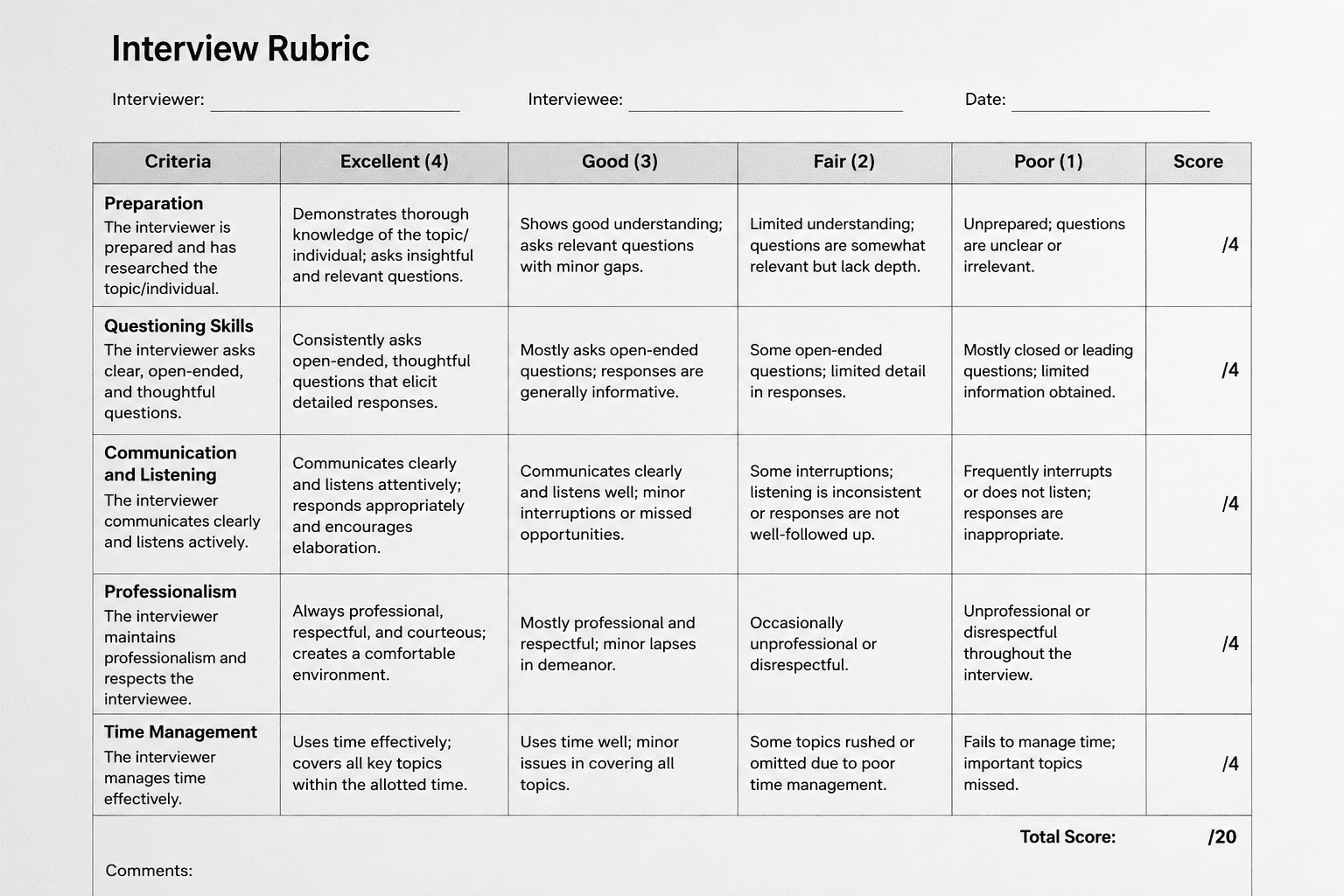
An interview rubric is a structured scoring guide that helps your team evaluate candidates with the same criteria.
Instead of asking interviewers to rely on memory, instinct, or vague impressions, a rubric defines what you want to assess and how each answer should be scored. It gives your recruiters and hiring managers a shared evaluation framework before the interview starts.
In practice, an interview rubric usually includes:
- The role being evaluated.
- The interview stage.
- The competencies you want to assess.
- The questions you will ask.
- The scoring scale.
- The definition of each score.
- Notes or evidence from the candidate’s answers.
- A final recommendation.
Google’s own structured interviewing guide for example recommends using a unified scoring guide so interviewers can rate candidates more accurately.
How to Build Interview Rubrics in a Fair and Efficient Way
A good interview rubric starts before your first candidate enters the process.
Start with the role, not the person
Your rubric should be built from the role requirements.
Start by asking what the person needs to do well, not what your team personally likes in candidates.
For each role, define:
- The main outcomes expected.
- The skills required to deliver those outcomes.
- The behaviors that predict success.
- The situations the person will face.
- The evidence that would prove they can succeed.
Choose 4 to 6 competencies
Your interview rubric should stay focused.
If you evaluate 12 competencies in one interview, your interviewers will either rush the process or score everything loosely. That reduces the value of the rubric.
A better approach is to choose 4 to 6 key competencies for each interview stage.
For example, a first recruiter screen may evaluate:
- Motivation.
- Communication.
- Role understanding.
- Salary and availability alignment.
A hiring manager interview may evaluate:
- Technical skills.
- Problem-solving.
- Role-specific experience.
- Collaboration.
A final interview may evaluate:
- Decision-making.
- Leadership.
- Values alignment.
- Long-term potential.
Use the same core questions
To compare candidates fairly, your team should ask the same core questions to every candidate for the same role and interview stage.
That does not mean your interviewers cannot ask follow-up questions. They should. Follow-ups help clarify examples and test depth.
But the main questions should stay consistent.
The U.S. Office of Personnel Management expicitally encourages the use of structured interview questions. It increases agreement between interviewers by limiting excessive discretion.
In practice, this means your rubric should connect each competency to one or two prepared questions.
For example:
- Problem-solving: “Tell me about a time you solved a complex problem with limited information.”
- Communication: “Explain a complex topic you had to simplify for a customer or stakeholder.”
- Collaboration: “Tell me about a time you disagreed with a teammate or manager.”
- Motivation: “Why does this role make sense for your next step?”
Define your scoring scale
A rubric is only useful if every interviewer understands the scores.
A simple 1–5 scale usually works well:
- 1 — No evidence: The candidate did not demonstrate the competency.
- 2 — Weak evidence: The answer was vague, incomplete, or poorly connected to the role.
- 3 — Meets expectations: The candidate showed acceptable ability with a relevant example.
- 4 — Strong evidence: The candidate gave a specific, structured answer with clear impact.
- 5 — Excellent evidence: The candidate showed exceptional ability, strong judgment, and measurable results.
Interview Rubric Template
Here is an easy template you can copy, paste, and personalize for your next hiring process.
Interview Rubric: [Job Title]
Candidate name:
[Candidate name]
Role:
[Job title]
Department:
[Department]
Hiring manager:
[Hiring manager name]
Interviewer:
[Interviewer name]
Interview stage:
[Recruiter screen / Hiring manager interview / Technical interview / Final interview]
Interview date:
[Date]
Interview format:
[Video / Phone / In-person]
Overall recommendation:
[Strong yes / Yes / Maybe / No]
Scoring Scale
1 — No evidence
The candidate did not show evidence of this competency. Their answer was missing, unclear, or not connected to the role.
2 — Weak evidence
The candidate gave a partial answer, but the example was vague, incomplete, or difficult to verify.
3 — Meets expectations
The candidate gave a relevant answer and showed an acceptable level of ability for the role.
4 — Strong evidence
The candidate gave a clear, specific, and convincing example. Their answer showed strong role fit.
5 — Excellent evidence
The candidate gave a highly relevant answer with clear ownership, strong judgment, and measurable impact.
Competency 1: Role-Specific Skills
What you are evaluating:
Can the candidate perform the core tasks required for this role?
Interview question:
“Tell me about a recent project or responsibility that is similar to what you would do in this role.”
Follow-up questions:
“What was your exact role?”
“What tools or methods did you use?”
“What result did you achieve?”
Candidate evidence:
[Write notes here]
Score:
[1 / 2 / 3 / 4 / 5]
Reason for score:
[Explain the score with concrete evidence]
Competency 2: Problem-Solving
What you are evaluating:
Can the candidate understand a problem, analyze options, take action, and learn from the outcome?
Interview question:
“Tell me about a difficult problem you had to solve at work.”
Follow-up questions:
“What made the problem difficult?”
“What options did you consider?”
“What did you do?”
“What was the result?”
Candidate evidence:
[Write notes here]
Score:
[1 / 2 / 3 / 4 / 5]
Reason for score:
[Explain the score with concrete evidence]
Competency 3: Communication
What you are evaluating:
Can the candidate explain ideas clearly and adapt their message to the person in front of them?
Interview question:
“Tell me about a time you had to explain something complex to someone who was not an expert.”
Follow-up questions:
“How did you adapt your explanation?”
“How did you know they understood?”
“What would you do differently now?”
Candidate evidence:
[Write notes here]
Score:
[1 / 2 / 3 / 4 / 5]
Reason for score:
[Explain the score with concrete evidence]
Competency 4: Collaboration
What you are evaluating:
Can the candidate work well with teammates, managers, and stakeholders?
Interview question:
“Tell me about a time you disagreed with a teammate, manager, or stakeholder.”
Follow-up questions:
“What was the disagreement about?”
“How did you handle it?”
“What was the final outcome?”
Candidate evidence:
[Write notes here]
Score:
[1 / 2 / 3 / 4 / 5]
Reason for score:
[Explain the score with concrete evidence]
Competency 5: Motivation and Role Fit
What you are evaluating:
Does the candidate understand the role, want the opportunity for the right reasons, and align with your hiring need?
Interview question:
“Why does this role make sense for your next step?”
Follow-up questions:
“What are you hoping to learn or achieve?”
“What attracted you to our company?”
“What would make this role a good move for you?”
Candidate evidence:
[Write notes here]
Score:
[1 / 2 / 3 / 4 / 5]
Reason for score:
[Explain the score with concrete evidence]
Red Flags
Red flags observed:
[Yes / No]
Details:
[Write any concerns here]
Examples:
- Candidate could not give specific examples.
- Candidate avoided accountability.
- Candidate showed little understanding of the role.
- Candidate gave inconsistent answers.
- Candidate did not meet a true must-have criterion.
- Candidate’s expectations were not aligned with the role.
AI Interview Rubrics: Noota Taalent
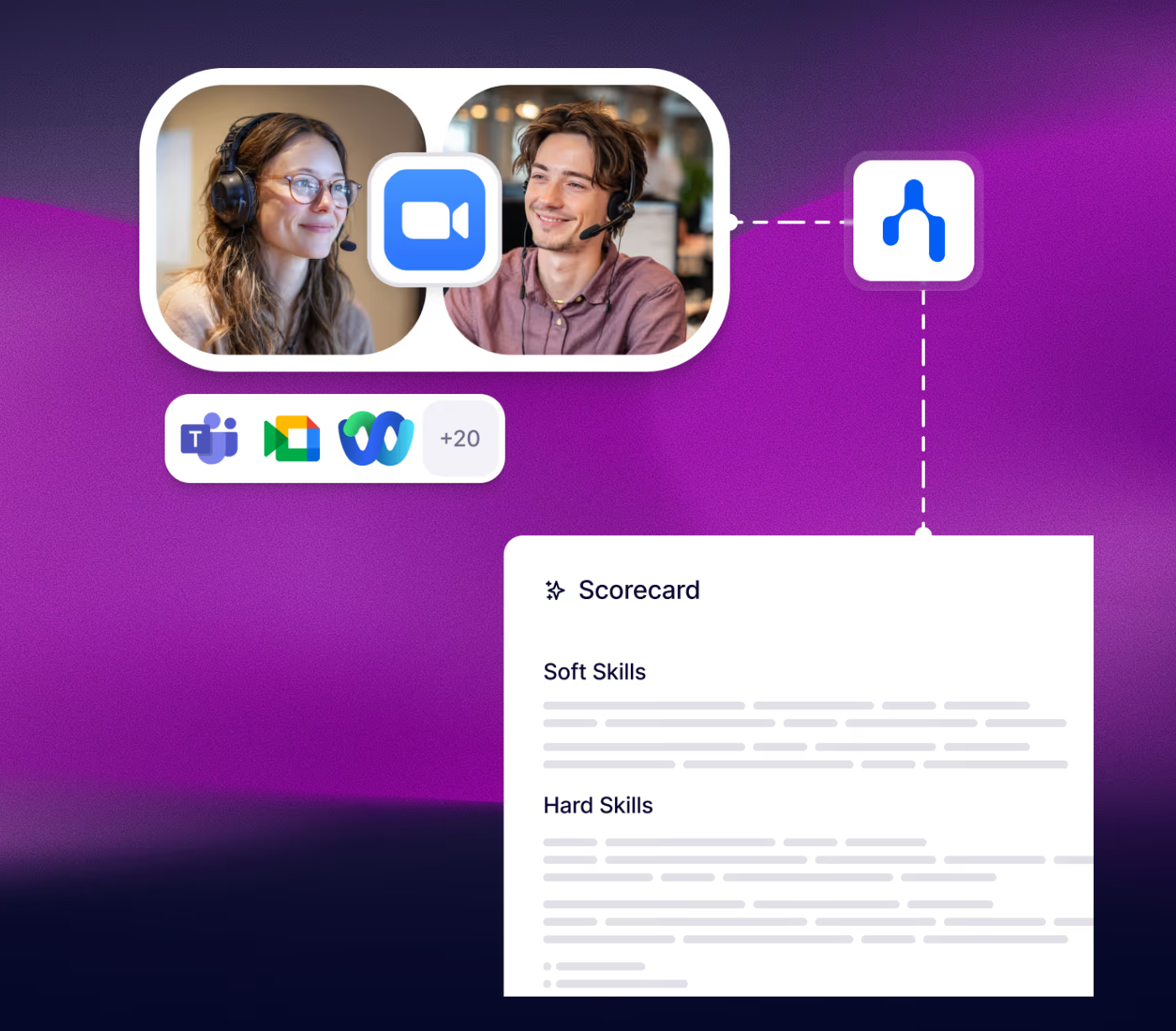
Sometimes interviewers spend time rewriting summaries instead of moving candidates forward.
Noota Taalent helps you turn your interview rubric into a structured AI-powered workflow.
Auto-generated scorecards from role criteria
With Noota Taalent, your rubric can start during the role intake phase.
Your team defines the job requirements, expected skills, and qualification criteria. Noota Taalent then helps turn that information into a scorecard that can be reused across candidate evaluation.
Structured candidate scoring
Noota Taalent does not only capture interview notes.
It also helps score candidates based on defined criteria.
Its candidate scoring and benchmarking documentation says each candidate is scored based on the scorecard defined during intake, making it possible to compare profiles with the same evaluation logic. It also mentions automatic scores, side-by-side comparison, evaluation history, and consistent decision-making across recruiters.
Candidate comparison and ATS sync
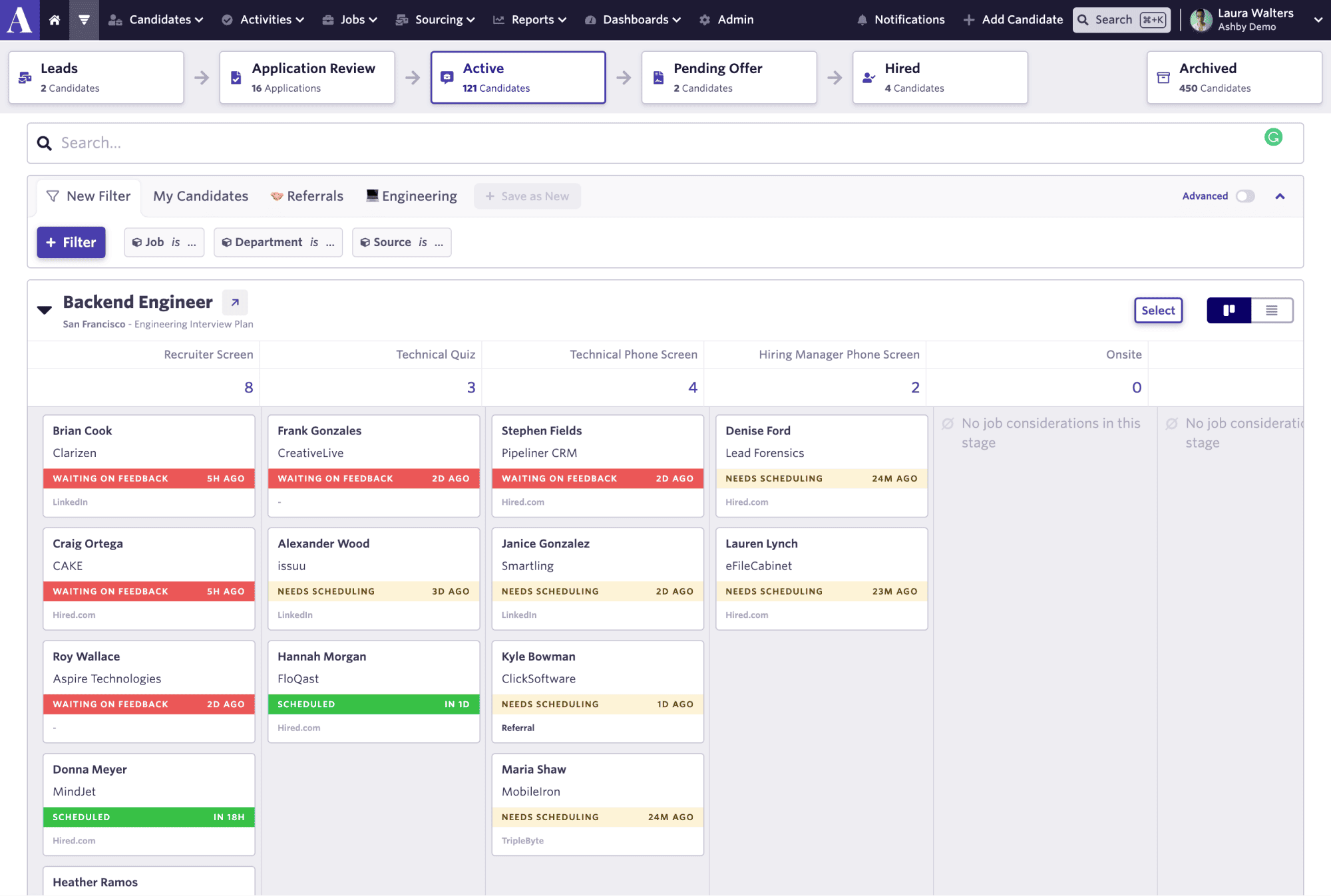
And when the process moves forward, Noota Taalent can synchronize candidate data, reports, and evaluation results with your ATS. Its ATS documentation describes Noota Taalent as an automation and intelligence layer on top of your existing system, rather than a replacement for your ATS.
FAQ
What is an interview rubric?
An interview rubric is a structured scoring guide that helps your team evaluate candidates against the same criteria.
It defines what you want to assess, how interviewers should score answers, and what evidence supports each score. Instead of relying on vague feedback like “good fit” or “not senior enough,” your team can evaluate specific competencies such as communication, problem-solving, motivation, leadership, or technical skills.
Google’s structured interviewing guide recommends using planned, relevant questions and a scoring guide to make interviewer ratings more accurate. It also notes that Google expanded structured interviewing with role-specific questions, rubrics, and interviewer training after positive results.
Why should your team use an interview rubric?
You should use an interview rubric because interviews can easily become subjective.
Without a rubric, each interviewer may focus on different signals. One may value confidence. Another may value technical depth. Another may remember the final answer more than the whole conversation.
A rubric gives your team a shared framework. It helps you compare candidates based on job-related evidence, not personal impressions.
The U.S. Office of Personnel Management states that interviews with higher structure show higher validity, rater reliability, rater agreement, and less adverse impact.
What should an interview rubric include?
A useful interview rubric should include the information your team needs before, during, and after the interview.
You can include:
- Role and interview stage.
- Competencies assessed.
- Core interview questions.
- Scoring scale.
- Score definitions.
- Behavioral anchors.
- Evidence notes.
- Red flags.
- Final recommendation.
For example, if you assess “problem-solving,” your rubric should define what weak, average, and strong answers look like. A weak answer may be vague. A strong answer may explain the problem, compare options, show ownership, and include measurable results.
What is the difference between an interview rubric and a scorecard?
An interview rubric defines how to evaluate the candidate.
An interview scorecard records the evaluation.
The rubric tells your interviewers what a 1, 3, or 5 means for each competency. The scorecard captures the candidate’s actual score, notes, and recommendation.
You need both.
Without a rubric, your scorecard may become a form filled with gut feelings. Without a scorecard, your rubric may stay theoretical and never influence the final decision.
How do you build a fair interview rubric?
Start with the role requirements.
Your rubric should evaluate what the candidate actually needs to do in the job. Avoid vague criteria like “good energy,” “culture fit,” or “executive presence.” Replace them with observable behaviors.
For example:
- “Explains complex ideas clearly.”
- “Handles disagreement constructively.”
- “Uses data to make decisions.”
- “Shows relevant experience with the role’s core tasks.”
Then use the same core questions for comparable candidates. You can still ask follow-ups, but the main questions and scoring scale should stay consistent.
Can AI help create interview rubrics?
Yes.
AI can help your team create role-based scorecards, summarize interviews, extract evidence, and compare candidates more consistently.
With Noota Taalent, your team can use AI interview notes and scorecards to organize candidate information and make comparisons easier. Noota’s Interview Agent page says it provides structured interview notes and scorecards to help teams compare candidates and make informed recruitment decisions.
Noota also offers an AI Interview Scorecard that helps teams compare key metrics, centralize feedback, and make decisions backed by data instead of impressions.
Should AI make the final hiring decision?
No.
AI should support your hiring team, not replace it.
Your recruiters and hiring managers should still review the evidence, check the scores, and make the final decision. AI is most useful when it helps your team stay structured, save time, and reduce messy feedback.
The final decision should remain human, explainable, and based on job-related criteria.
Leverage your Interview Data
AI interview notes, scorecard, follow-up, ATS integration, and more...

Jean-marc is an AI expert helping recruiters & professionnals leverage these tools in their everyday work.
Related articles
.webp)
.png)


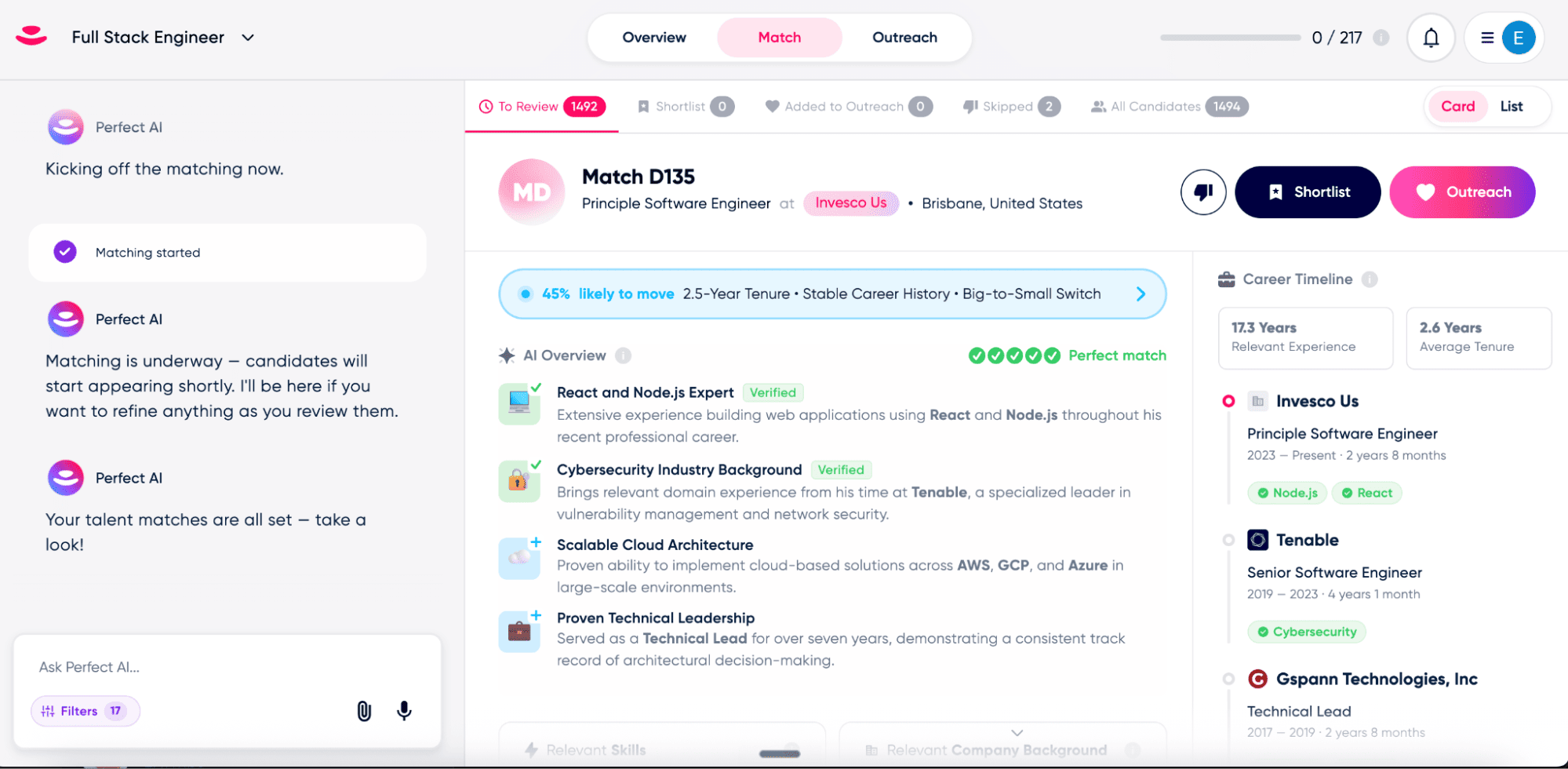
Forget manual sourcing and screening.
try Taalent now
FAQ
In the first case, you can directly activate recording as soon as you join a videoconference.
In the second case, you can add a bot to your videoconference, which will record everything.
Taalent also enables you to translate your files into over 30 languages.


.svg)